The Breakthrough That Could Have Saved My Son
Journalists, by profession and nature, look for stories. We search for what’s new, important, long-awaited, surprising or hidden so we can share it and help people understand the world. There is no better job. We’re also competitive, scanning headlines and bylines, looking at what others have found to see if we’ve been scooped.
Last week I read a headline in the New York Times that stopped me in my tracks. It was the story I wished with all my soul I could have written myself a few years ago, before it was too late for my son Henry.
I’d already written it in my head.
And yet there it was in front of me.
“Baby Is Healed With World’s First Personalized Gene-Editing Treatment.”

The sub-headline declared:
“The technique used on a 9½-month-old boy with a rare condition has the potential to help people with thousands of other uncommon genetic diseases.”
Henry, who passed away two years ago this summer, had one of those other uncommon genetic diseases. It is called Rett syndrome and is caused by a tiny mutation of a gene called MECP2 in our DNA. I didn’t know what MECP2 was until the diagnosis.
The names of genetic diseases are codes. More specifically, they are coordinates that locate on the genetic map the exact spot where an error is located. Henry’s problem, the root of the issue that prevented him from walking, talking and breathing properly, was right there in the MECP2 gene. Yet it remained unreachable.

Genetic diseases tease you. You stare into a glass box. You can see the culprit, but can not touch him. If only that little genetic quirk, that typo among billions of coded characters could be repaired, then everything else would fall into place.
“The baby, now 9 ½ months old,” The New York Times reported, “became the first patient of any age to have a custom gene-editing treatment, according to his doctors. He received an infusion made just for him and designed to fix his precise mutation.”
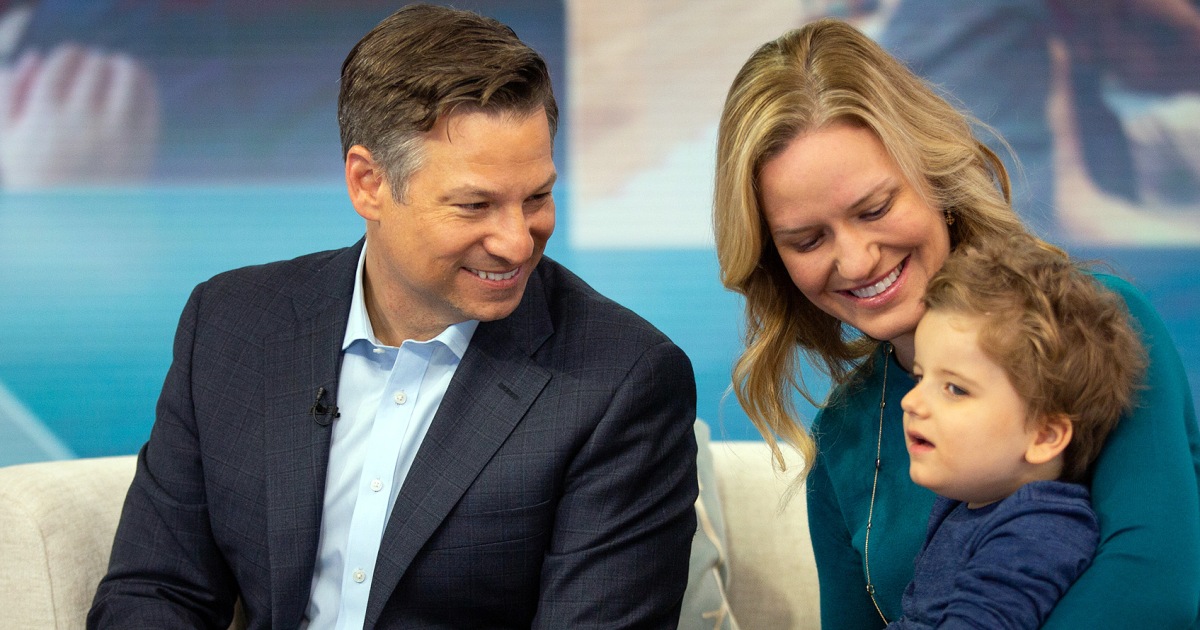
I wished I could have broken the story with Henry as patient zero. I had imagined the roll-out too, coming back on the set of TODAY with Henry and his mother Mary, who has written about Henry’s life and losing him for TODAY.com.
We’d sit with Savanah Guthrie, who has been supporting ongoing research using Henry’s cells, and talk — cautiously, hopefully and thankfully — about the progress we were seeing. I allowed myself to imagine saying that Henry was starting to speak. He had been awakened, cured and reborn. There wouldn’t be a dry eye in the studio.

I never got to do that story about Henry. Sometimes our timelines don’t overlap with scientific progress.
They rarely do.
Mary and I are full of nothing but joy that from now on, so many other families will be able to write new and wonderful stories of their own.
link