Vaccine status, day care questions answered


Measles outbreak: Who’s at risk and who’s likely immune from virus
As measles continue to spread in the U.S., here’s who is at risk and who’s immune from one of the most contagious viruses in the world.
Ohio is now part of a growing list of states experiencing a recent measles outbreak, raising questions about how best to protect loved ones amid case numbers only expected to rise.
Measles, a disease once considered eradicated by the United States in 2000, has hit at least 19 states and was at nearly 500 reported cases as of late Friday afternoon. That surpasses the total 277 cases reported in 31 states plus Washington, D.C., last year, according to the Centers for Disease Control and Prevention.
Ohio is currently one of five states with a measles outbreak — three or more cases — and currently has 11 cases of measles. Ten of those are in one outbreak in Ashtabula County in the northeast corner of the state that started with someone who traveled internationally, plus one case in Knox County. None of the people in the confirmed cases in Ohio were vaccinated.
The largest outbreak in the nation is in Texas, where there were 400 cases as of late Friday afternoon, most in the western portion of the state, the CDC said. The other three states with outbreaks are New Mexico (44), Kansas (23) and Oklahoma (nine, two of those listed as “probable”).
The Dispatch reached out to the central Ohio community to gauge the biggest questions on Buckeye minds about measles, and gathered information from local and state health experts from Ohio State University Wexner Medical Center, Nationwide Children’s Hospital and the Ohio Department of Health to get some answers.
A recap on measles
Measles is a highly contagious virus that spreads when an infected person breathes, coughs or sneezes, according to the CDC. A single infected person can infect around 18 others if those people are not vaccinated, and one in five of those people will be hospitalized, the CDC says.
By comparison, COVID-19’s infection rate is between two and four infections per contact with an infected person.
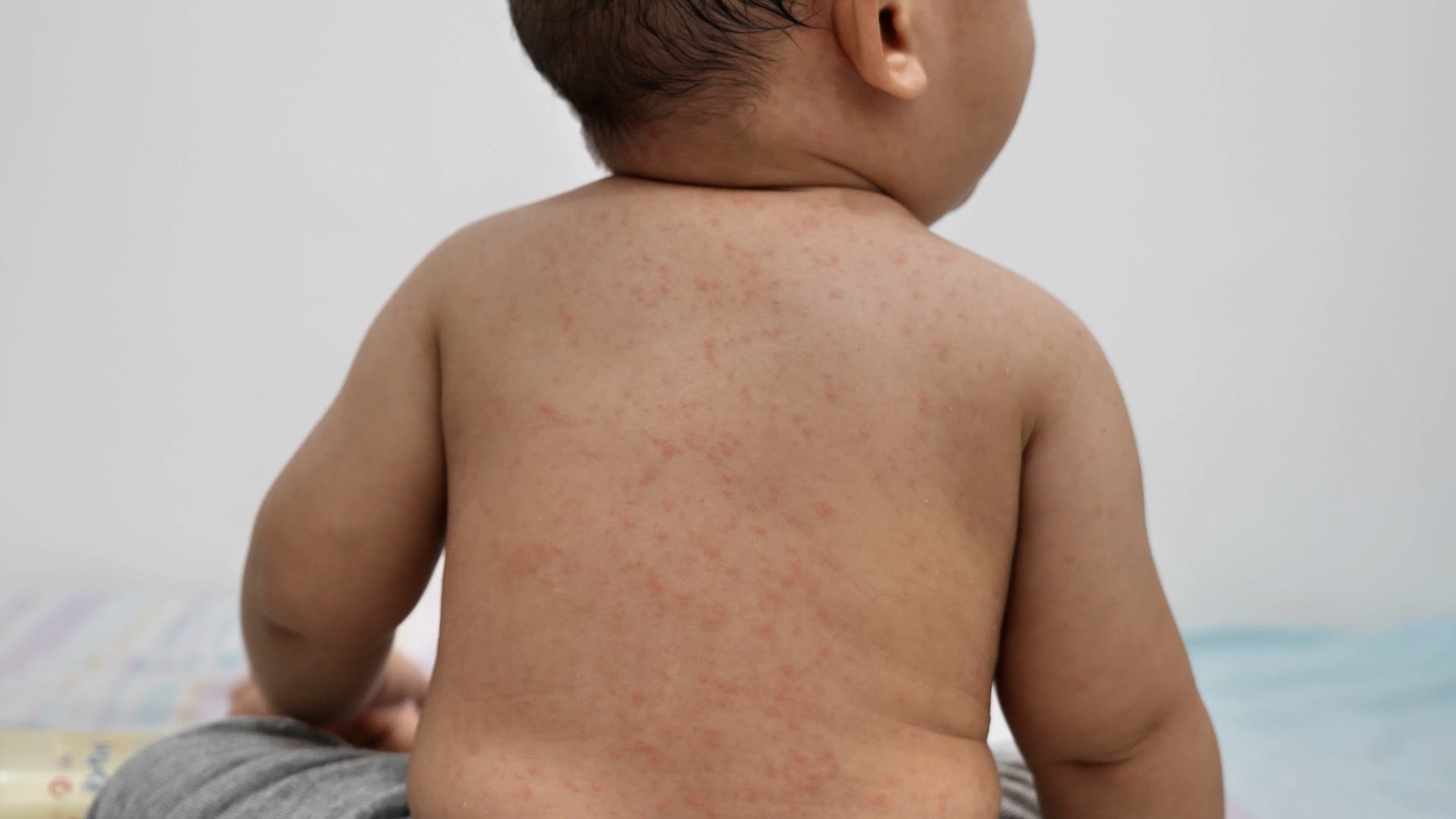
Measles symptoms can include fever, runny nose, cough, red and watery eyes and a rash all over the body. These symptoms usually last seven to 10 days, and the virus can cause longer lasting complications, like ear infections, pneumonia and brain swelling. In some cases, a child can die seven to 10 years after a measles infection from neurological complications,
There’s more risk of a spread than previous years, as nationally, vaccine rates for the measles vaccine, or MMR vaccine, have been falling since the pandemic, according to the CDC. Prior to the first dose of the measles vaccine in 1963, hundreds of Americans died each year from measles, millions contracted it and thousands more suffered brain swelling from measles.
The CDC said the good news is that the measles vaccine is safe and effective. It has a 93% efficacy rate for the first dose at around one year, and a 97% efficacy rate for the second dose at around age 5.
Who has the highest risk for infection?
Unvaccinated people of any age are at the highest risk of infection. Measles is especially dangerous for babies and young children due to associated complications. A child in Texas died from measles in February; an adult in New Mexico died in March. Both of those who died were unvaccinated.
Severely immunocompromised people, like some cancer patients or bone marrow transplant patients, are also at risk of contracting measles, even if they’re vaccinated.
However, elderly individuals who were not vaccinated but were born before 1957 and likely had measles as a child due to how rampant the disease was at the time are not currently considered at risk.
Anyone who isn’t sure about their vaccination status or immunity level can talk to their primary care physician or health care provider about a blood test for measles antibodies if they want to be certain whether they have them.
Is the Ohio outbreak in an Amish or Mennonite community?
A 2014 measles outbreak in Ohio spread in the Amish community with hundreds of cases, and the outbreak in Texas spread primarily in a Mennonite community. These communities often have lower vaccination rates because of vaccine hesitancy or lack of access to health care.
The Ohio Department of Health has declined to offer any details about the community the outbreak occurred in or share any personal information about the infected persons.
I was vaccinated as a child. Should I get a booster?
Due to the vaccine’s strong efficacy, you don’t need to get a booster of the measles vaccine if you already had two doses of the childhood measles vaccine. Consult your doctor if you have questions.
If you only received one dose of the vaccine and work in education, the health care sector, child care or other fields where you’re consistently around children or sick people, or if you intend to travel internationally, you might need a booster and should speak to your doctor.
If you are pregnant, you cannot get the vaccine, regardless of vaccination status.
In some cases, an additional measles vaccination can be administered to a baby at around six months of age, but that’s not usually recommended unless there is an imminent threat to the community the baby lives in or the baby is traveling to a place where measles infections more commonly occur. If the child does receive a booster earlier than 12 months old, it’s considered “dose zero,” and they still need to receive the two normal vaccinations.
Columbus Public Health offers MMR vaccines, and you can also find them at retail pharmacies like CVS and Walgreens. There usually is a small fee associated with the vaccine, but it could be waived based on ability to pay or covered by insurance.
My child isn’t old enough to be fully vaccinated. Is my day care safe?
In Ohio, parents bringing their children to licensed child care centers must provide medical statements of typical required childhood vaccinations already received or that their children are in the process of receiving. This includes the MMR vaccine.
However, by law, a child isn’t required to be immunized if they can’t receive a vaccine for medical reasons, or if their parent or guardian declares “reasons of conscience,” a non-medical vaccine exemption.
The current rate of non-medical exemptions in Ohio’s kindergarteners sits at around 4%, while the national average is around 3.3%, according to the CDC.
Health officials recommend speaking directly to your child care provider about their vaccination policy. By law, child care providers are required to alert parents and local health departments of exposure to a communicable disease, either from an infected child or staff member, like measles. The child or staff member must be “excluded” from the child care center until they are no longer contagious.
If your child is exhibiting any symptoms of illness, keep them home. Measles can first appear with cold-like symptoms.
Do masks protect against measles? What other measures can I take?
The only fully-endorsed protection by health experts against measles is the vaccine.
As with any infectious disease that’s airborne, KN95 masks offer some protection, as does handwashing and isolation. However, masking should not be relied upon for complete protection.
Vitamin A has recently been touted by U.S. Health and Human Services Secretary Robert F. Kennedy Jr. as a way to prevent measles.
There is no evidence that vitamin A will prevent measles, medical experts say, and some children in Texas who contracted measles are being treated for vitamin A toxicity, a condition where someone has too much of the vitamin, which can damage the liver and brain.
Medical business and health care reporter Samantha Hendrickson can be reached at [email protected] or @samanthajhendr on X, formerly known as Twitter.
link